Roof Replacement Is More Than New Shingles | ACS Roofing Michigan
What’s Under Your Shingles Matters: Why a Quality Roof Replacement Goes Beyond the Surface
When homeowners picture a roof replacement, the first thing that usually comes to mind is shingles. You remove the old roof, install new shingles, and suddenly the house has a completely refreshed appearance.
But some of the most important work involved in a roofing project happens before the finished shingles ever go on.
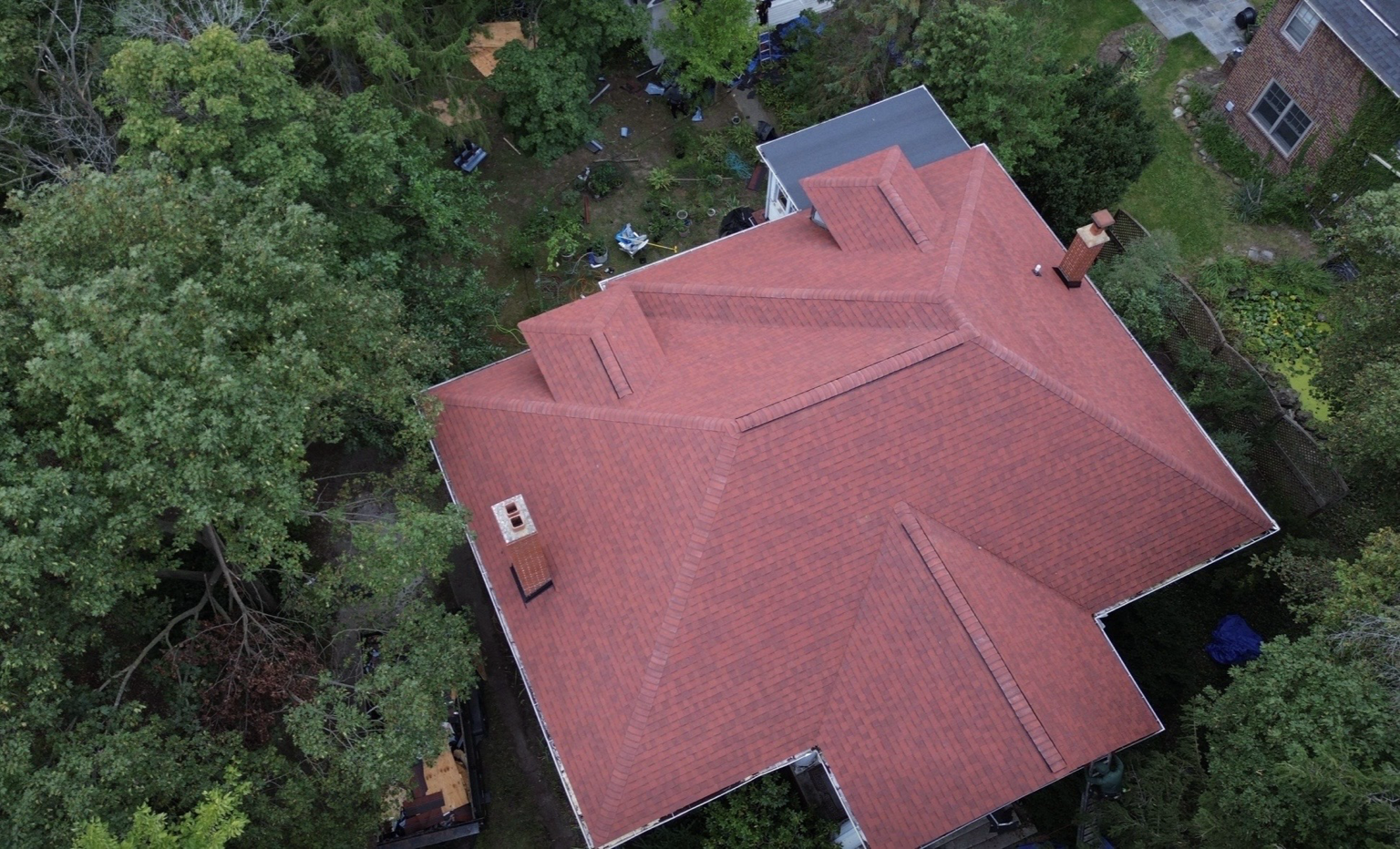
A recent ACS Roofing project is a great example. The finished roof has a clean, uniform appearance, but photos taken during the project also show areas where the roofing system was opened up and underlying components could be evaluated and addressed.
That behind-the-scenes work is an important part of doing a roofing project correctly.
Your Roof Is an Entire System
Shingles are the first line of defense against Michigan weather, but they aren’t working alone.
A residential roofing system can include several important components, including:
Roof decking
Underlayment
Flashing
Ridge and attic ventilation
Valleys
Roof penetrations
Drip edges and perimeter components
Shingles and ridge caps
Each component has a different job, but they ultimately work together to help keep water and moisture away from the structure of the home.
That’s why simply focusing on how the finished shingles look doesn’t tell the whole story.
What Is Roof Decking?
Roof decking is the structural surface underneath the roofing materials.
On many homes, the decking consists of plywood or oriented strand board, commonly known as OSB. The roofing underlayment and shingles are installed over this surface.
When the old roofing materials are removed during a replacement, contractors have an opportunity to see portions of the decking that normally remain hidden.
This is important because damaged or deteriorated decking can affect the foundation upon which the new roofing system is being installed.
Why Decking Needs to Be Evaluated During Roof Replacement
One of the project photos from this ACS Roofing job shows an area of the roof opened during the roofing process.
This is exactly why roof replacement shouldn’t simply be viewed as changing the exterior shingles.
Once the existing materials are removed, the condition underneath can be evaluated.
Potential problems may include moisture-related deterioration, weakened sections, previous roofing issues, or areas that simply aren’t suitable for supporting the new roofing materials.
When necessary, those concerns should be addressed before the finished roofing system is completed.
Installing beautiful new shingles doesn’t solve an underlying structural problem.
Ventilation Is Another Important Part of the Roofing System
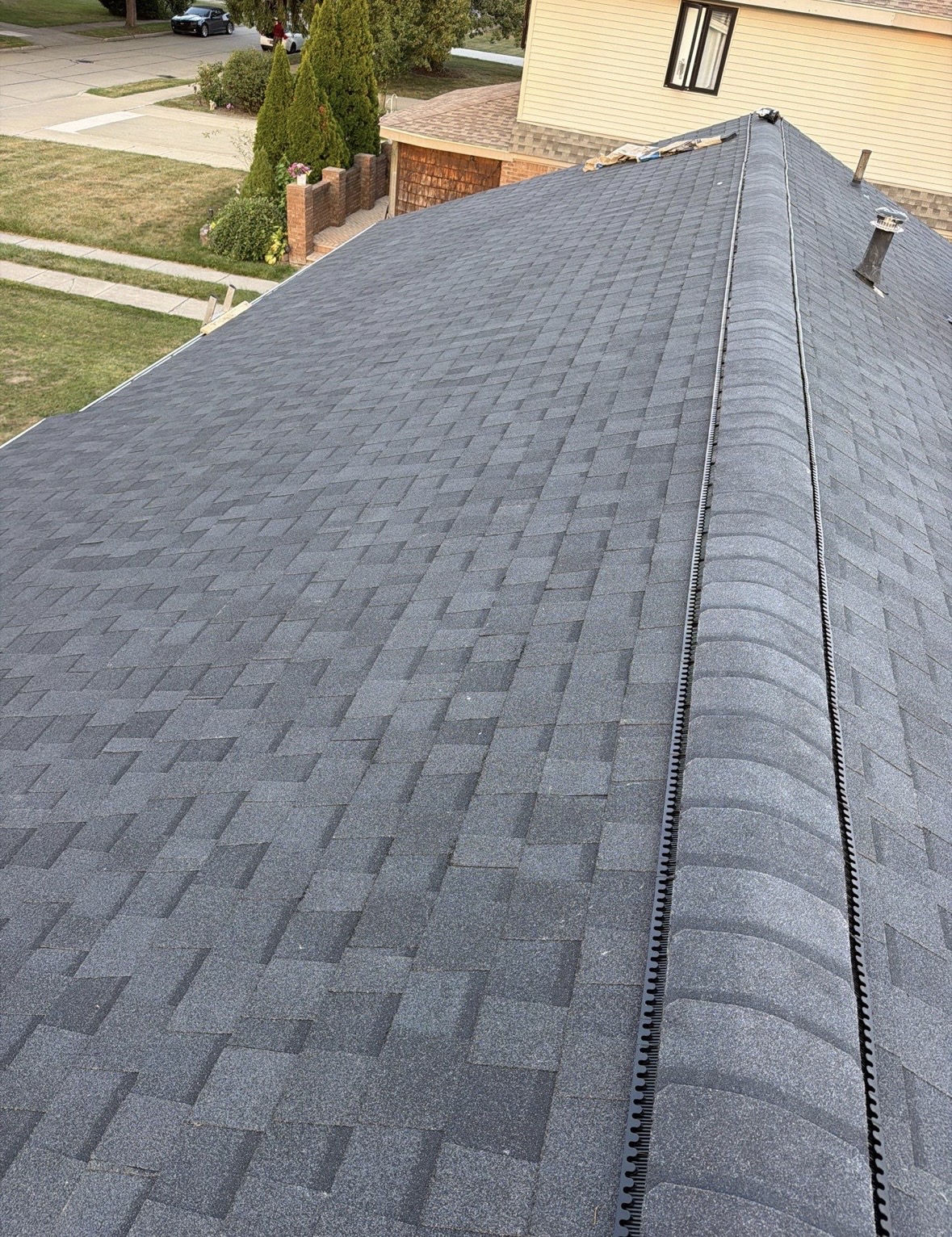
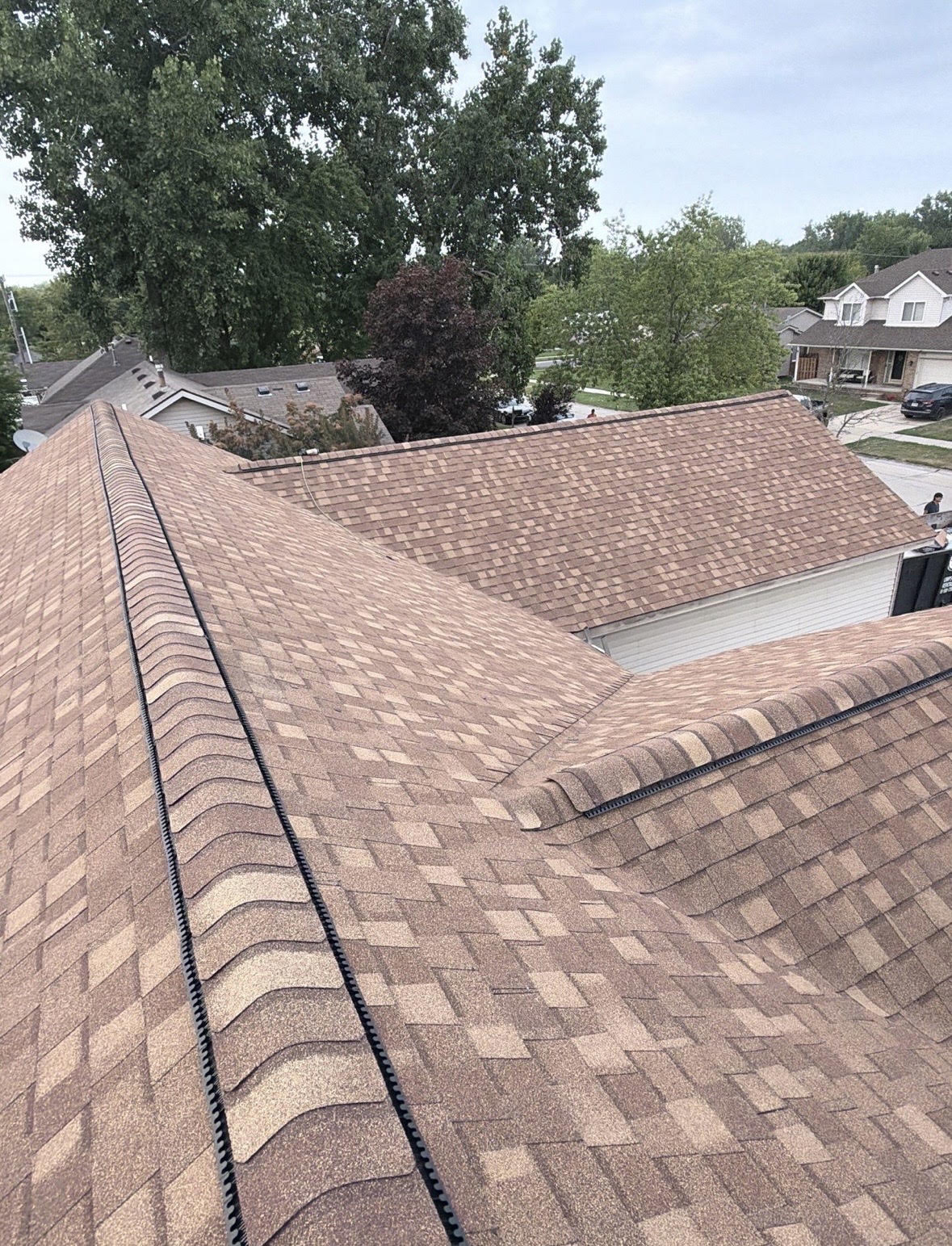
The finished photos from this project also clearly show ridge ventilation running along portions of the roof.
Roof ventilation isn’t usually the feature homeowners get excited about when choosing a new roof, but it can play an important role in the overall roofing system.
Proper attic ventilation helps manage heat and moisture conditions beneath the roof.
During Michigan summers, attic spaces can become extremely hot. During colder months, moisture conditions and temperature differences can create an entirely different set of challenges.
A properly designed ventilation system helps create airflow through the attic space.
What Does Ridge Ventilation Do?
Ridge vents are installed near the highest points of the roof.
When used as part of a properly designed ventilation system, they allow warm air to escape from the attic while intake ventilation allows replacement air to enter from lower portions of the roof.
The goal is continuous airflow rather than simply creating random openings in the roof.
Ventilation requirements vary depending on the design of the home, which is why it should be evaluated as part of the roofing system rather than treated as an afterthought.
Flashing and Roof Penetrations Deserve Attention Too
Anywhere something passes through or intersects with a roofing system deserves careful attention.
Examples can include chimneys, plumbing vents, exhaust vents, walls, valleys, and other transitions.
These areas require appropriate roofing techniques and flashing because they represent locations where water must be carefully directed away from openings and transitions.
A roofing system may contain thousands of shingles, but one poorly protected transition can still create a problem.
Attention to details matters.
Why Proper Preparation Matters Before New Shingles Are Installed
Once a new roofing system is complete, homeowners see the finished product.
They see the shingle color, clean ridge lines, and updated exterior appearance.
What they don’t see is all of the preparation underneath.
That preparation can be one of the most important parts of the project.
Before the finished roofing materials are installed, the underlying surface should be evaluated and prepared appropriately. Roofing components need to be installed in the proper sequence, and vulnerable areas need careful attention.
A quality roofing project should be built from the roof deck outward.
Michigan Weather Makes Roofing Details Especially Important
Michigan puts roofing systems through dramatically different conditions throughout the year.
Summer can bring heat, heavy rain, thunderstorms, and strong winds.
Fall temperatures can change quickly.
Winter introduces snow, ice, and extended freezing conditions.
Spring often brings repeated freeze-and-thaw cycles along with significant rainfall.
A roofing system needs to handle all of those conditions.
That’s one reason proper installation and attention to the complete roofing system are so important for Michigan homeowners.
Don’t Judge a Roofing Project Only by the Finished Picture
A newly completed roof should look great.
Roof replacement can dramatically improve curb appeal and make an older home look newer almost immediately.
But homeowners should also care about what happened before the final photograph was taken.
Was the underlying roof evaluated?
Were areas needing attention addressed?
Was ventilation considered?
Were transitions and penetrations handled correctly?
Were quality materials installed according to the requirements of the roofing system?
Those questions can be every bit as important as choosing the shingle color.
When Should You Consider Having Your Roof Evaluated?
You don’t necessarily need to wait for an active leak.
Consider having your roof professionally evaluated if you’ve noticed missing or damaged shingles, visible deterioration, recurring repairs, water staining, excessive granule loss, or other changes in the roofing system.
Roof age is another consideration.
An older roof isn’t automatically a failed roof, but understanding its condition can help you plan ahead rather than being surprised by an urgent replacement.
Professional Roofing Services From ACS Roofing
ACS Roofing helps Michigan homeowners understand the condition of their roofing systems and determine an appropriate path forward.
Whether your home needs a targeted roof repair or complete replacement, the goal should be the same: address the roofing system properly rather than focusing only on what is visible from the ground.
A roof replacement is a major investment in your home, and the details underneath the finished shingles matter.
If your roof is aging, showing signs of deterioration, or you’re considering a complete roof replacement, contact ACS Roofing today to schedule a roofing consultation. Ask about available financing options, roofing warranty protection, and current savings available for qualifying homeowners.